3D Product Configurators: How Indian Fashion Brands Can Enable Online Customisation
Indian fashion brands are increasingly adopting 3D product configurators to offer a unique online shopping experience. By integrating interactive tools that allow customers to personalise fabrics, colors, and designs, these brands can boost engagement, reduce return rates, and cater to a growing demand for customisation. The question is: how can Indian fashion brands leverage this technology effectively?
Why Customisation Matters in Indian Fashion
Customisation is not a luxury anymore—it’s an expectation. A study by Deloitte found that 36% of consumers are interested in purchasing customised products, and this trend is particularly strong in the fashion sector.
!3d product configurators how indian fashion brands can enable online customisation, industry
- Indian shoppers are drawn to personalised ethnic wear, such as sarees and kurta designs.
- The rise of D2C brands has made customisation a competitive differentiator in e-commerce.
- Offering customisation reduces e-commerce return rates, which currently sit at 20-40% for apparel.
How 3D Product Configurators Work
A 3D product configurator is an interactive tool that allows customers to visualise and customise products directly on the website. These configurators use WebGL or other 3D rendering technologies to create realistic previews of custom designs.
Steps to Implement a 3D Configurator
- Design Integration: Integrate the configurator with your product catalog, enabling options like color, fabric, and pattern selection.
- WebGL Support: Use technologies like Draftly's 3D Builder for seamless rendering without compromising website speed.
- Mobile Optimisation: Ensure configurators work smoothly on mobile devices, as 80% of Indian shoppers browse on phones.
Benefits for Fashion Brands
- Reduced Returns: Customers can preview their custom designs, reducing dissatisfaction and return rates.
- Higher Engagement: Interactive tools encourage longer dwell times and higher conversion rates.
- Increased Revenue: Personalised products often command higher price points, boosting margins.
Success Stories: Indian Brands Using 3D Technology
Several Indian fashion brands have already made strides in adopting 3D product configurators.
Manyavar: Digital Ethnic Wear Customisation
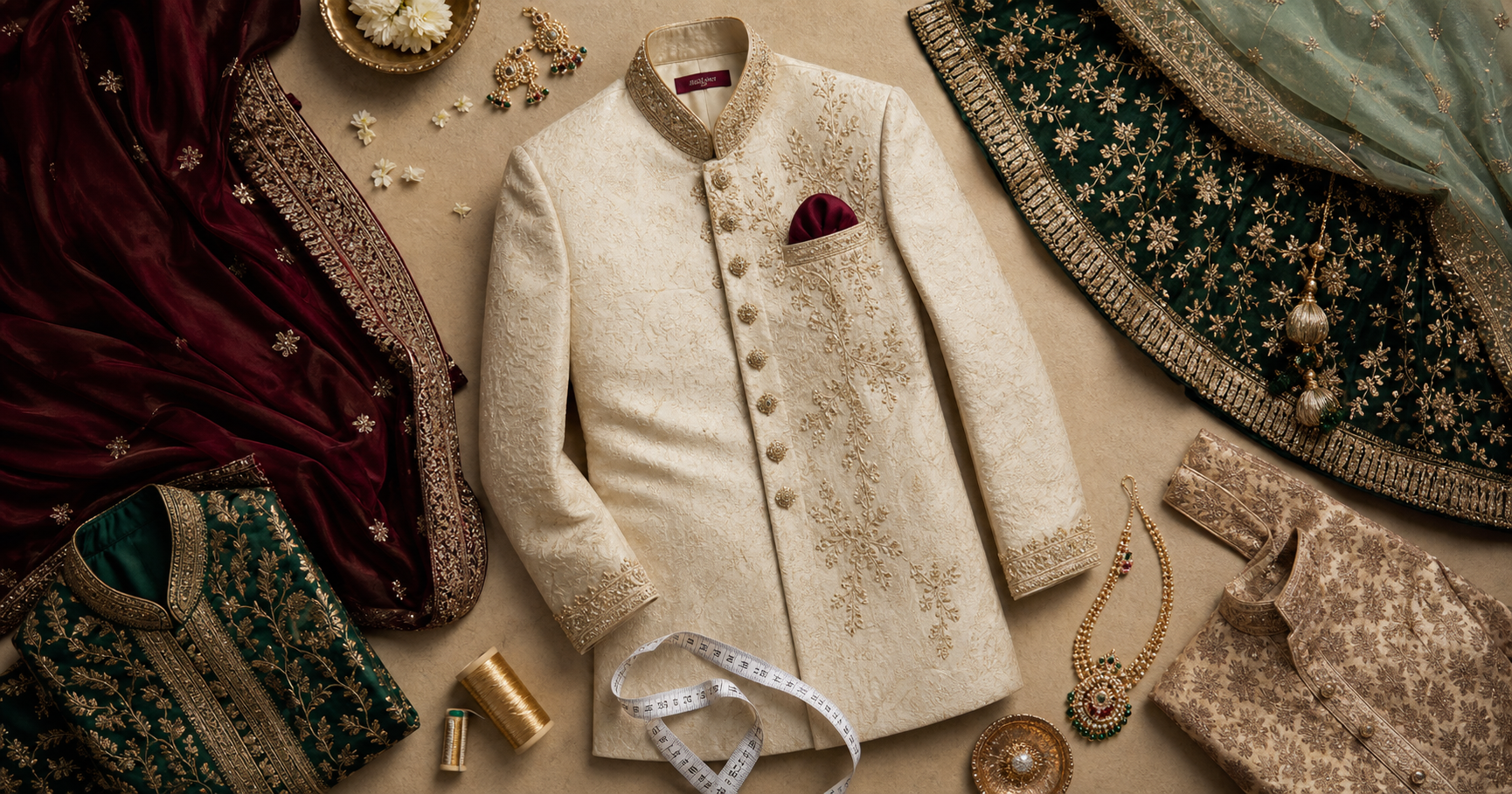
Manyavar introduced a feature allowing users to customise sherwani designs online. This initiative led to a 15% increase in conversion rates and reduced return rates by 30%. They partnered with AI-driven platforms to ensure seamless integration and mobile responsiveness.
Fabindia: Personalised Fabric Selection
Fabindia’s online platform lets customers choose fabrics and patterns for bespoke kurtas. By visualising designs in real time, the brand saw a 20% higher average order value.
Beyond Customisation: Connecting Offline Experiences
Brands like Sabyasachi use 3D lookbooks to showcase designs online, bridging the gap between digital and in-store experiences. Why 3D Websites Are the Next Frontier for Brand Differentiation highlights how immersive experiences enhance brand storytelling.
Building 3D Configurators with Draftly
Draftly simplifies the creation of scroll-driven 3D websites that integrate customisation tools effortlessly. Using Draftly, Indian fashion brands can:
- Embed interactive configurators that work across devices.
- Incorporate video backgrounds to make product pages cinematic and engaging.
- Optimise site performance for mobile users with Core Web Vitals.
Draftly Features for Fashion Brands
- AI-Powered Design Tools: Generate realistic 3D previews from a single prompt.
- Speed Optimisation: Stay fast without sacrificing visual quality.
- Customisation Blocks: Add interactive elements like color swatches and fabric selectors.
Challenges and Solutions for Indian Fashion Brands
Despite the benefits, implementing 3D configurators comes with challenges:
Common Obstacles
- Technical Complexity: Integrating 3D tools requires specialised knowledge.
- Costs: High-quality configurators can be expensive.
- Mobile Compatibility: Many tools struggle with performance on slower networks.
How to Overcome Them
- Use AI-driven platforms like Draftly to automate setup and reduce costs.
- Focus on lightweight designs to ensure smooth performance across devices.
- Test thoroughly for usability with tools like heatmaps.